Emergency ContactPCO Download Guide
Site Logo
CompanyNewsCrop AdvisersInternational Footprint
Site Logo
ProductsCore CapabilitiesCompanyNewsCrop AdvisersInternational FootprintContactEmergency ContactPCO Download Guide
Site Logo
Site Logo

Enhancing agricultural performance by unlocking nature's potential.

Company

About UsAECI® World

Products

South AfricaInternational

Core Capabilities

Bulk FertilisersOn-Farm TrainingTechnical Field SupportIn-house Product Development

Discover

Biocult®NuWay®Khula

Connect

Crop AdvisersInternational FootprintLatest News

Legal

B-BBEE CertificateSHEQ PolicyPrivacy PolicyTerms & ConditionsCropLifeFertasaISO 9001:2015SABOS&EHS Policy

Emergency Contact

The Poison Information Centre: 0861 555 777 In Case of Spillage: 086 100 0366
AECI® Plant Health 2026. All rights reserved.
Understanding Semiochemicals
  1. Home
  2. /News
  3. /Understanding Semiochemicals
Technical Insights

07/10/2026

Understanding Semiochemicals

With the growing dissatisfaction towards conventional pest control methods, a popular alternative is to modify insect behaviour and manipulate pest populations by means of molecular approaches. Semiochemicals are signalling, chemical molecules targeting individuals of the same species (intraspecific) or different species (interspecific). These signals are emitted by one individual to elicit a response in another, thus resulting in a change in behaviour. Semiochemical signals are divided into two broad classes, namely Pheromones and Allelochemicals.

Pheromones

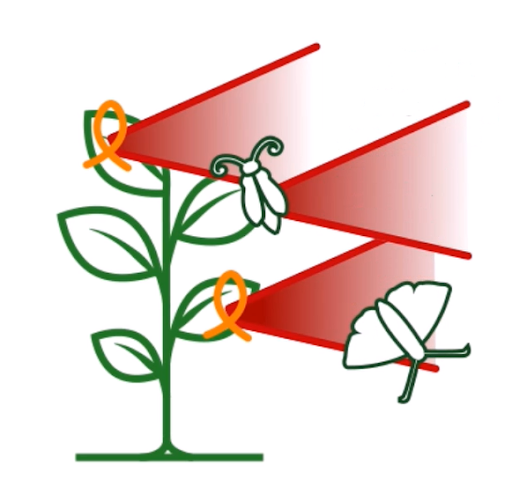
Insect pheromones are intraspecific signals and are used to prompt mating behaviour. These olfactory cues are highly species specific and are produced by female moths to trigger a social response in the male species, with the aim of avoiding competition and increasing pest populations by mating. With the phytosanitary and regulatory restrictions limiting use of most synthetic insecticides, mating disruption has become one of the most widely used methods in integrated pest management (IPM) programs globally. These species-specific female pheromones are synthetically produced with the aim or reducing pest abundance by disrupting the normal mating process. The male moth will fly upward into the plume to locate the source of the pheromone. When the orchards are saturated with the formulated pheromone, it results in more point sources of the pheromone dispensers, compared to that of the feral female (Figure 1).

Figure 1: Pheromone dispensers act as false source disorientating males and making him unable to detect the plume of calling female.
The diffused formulated plume will disrupt the normal insect pheromone channel causing the male pest to become disorientated and unable to find his female counterpart, thus interrupting normal mating behaviour and reducing pest abundance.

Allelochemicals

Allelochemically-mediated communication can be divided into four categories, namely allomones, synomones, apneumones, and the most well-known group being the kairomones (El-Shafie & Romeno, 2017).

Allomones are chemical counter measures that are used as a defence mechanism against potential predators. The release of these chemical markers are beneficial to the sender but not the receiver. Synomone signals are mutually beneficial to both the producer and the receiver, and are primarily responsible for attracting pollinators. Apneumone chemical markers are produced by non-living organisms which are beneficial to the receiving species but not favourable to any other organism in the non-living matter (El-Shafie & Romeno, 2017).

In most cases kairomones cause a behavioural or physiological response which benefits the recipient of the interspecific communication, whist being disadvantageous to the emitter/producer.  Predators, parasites and parasitoids use kairomones to locate food and/or oviposition sites (Kost, 2008). In some cases, the prey can also chemically detect the predator and undergo behavioural and morphological changes (Gross, 2009). By enhancing the effectiveness of natural enemies, kairomones have been used in pest management efforts for decades, to reduce economic losses and negative effects caused by pest damage.

Semiochemicals have been used in pest management for decades, however its importance is gradually increasing, due to its ability to repel pests, attract natural enemies, influence the behaviour of insects and drastically reduce pest abundance, without the concern of pesticide residues.


Read Related Articles

Grow with us! Mongameli NkosiVideo

18/11/2026

Grow with us! Mongameli Nkosi

This Friday, AECI® Plant Health Herbicides and Adjuvants Product Portfolio Manager Mongameli Nkosi discusses the products he is responsible for in this week's video. In the next installment of our "Grow with Us!" video series, we hear from AECI® Plant Health's SB Coetzee.

Read Article
 Precision in Every Droplet: Smart Considerations to Improve Spray Deposition and Product PerformanceTechnical Insights

12/11/2026

Precision in Every Droplet: Smart Considerations to Improve Spray Deposition and Product Performance

Modern agriculture is rapidly embracing new application technologies, from advanced adjuvant systems and drone-based applications to increasingly sophisticated precision spraying platforms. While these innovations provide greater control over how crop protection products are applied, application success depends on a complex interaction of factors beyond the nozzle-to-target interface.

Read Article
Getting closer to our businesses and their customersNews

12/10/2026

Getting closer to our businesses and their customers

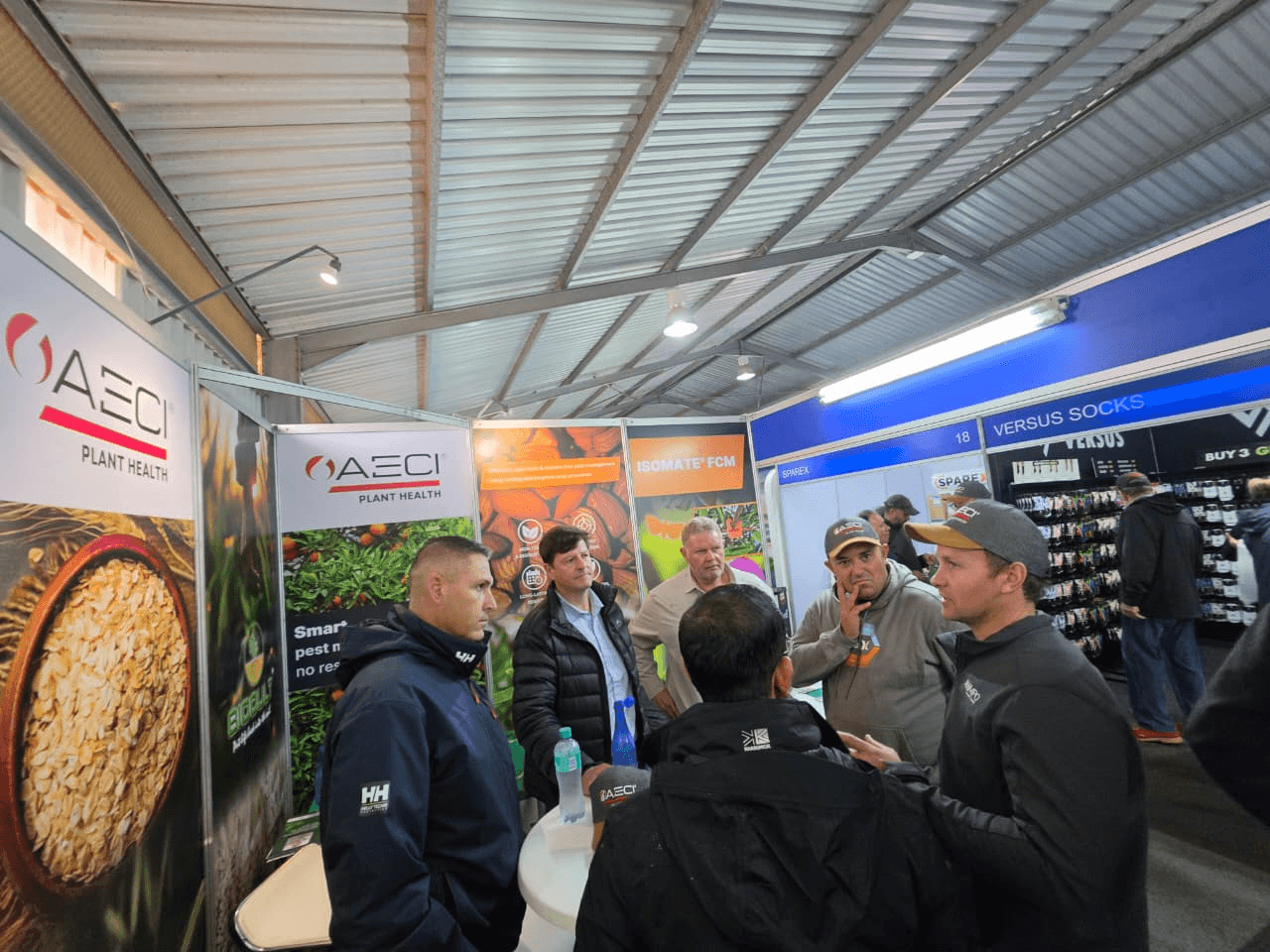
AECI® Group CEO Alan Dickson, together with colleagues from AECI’s head office, recently joined the AECI ® Plant Health team for a closer look at the business and the agricultural sector it serves.

Read Article